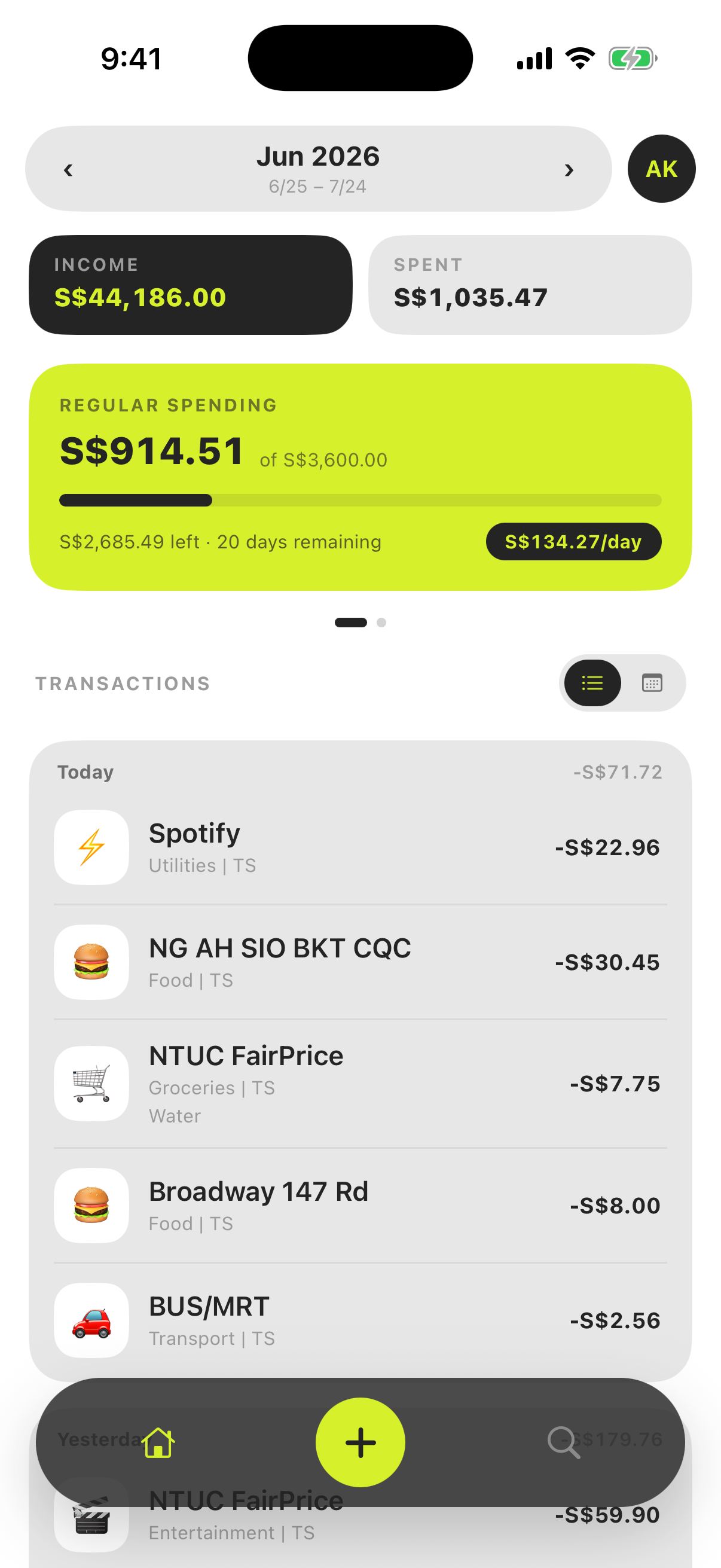
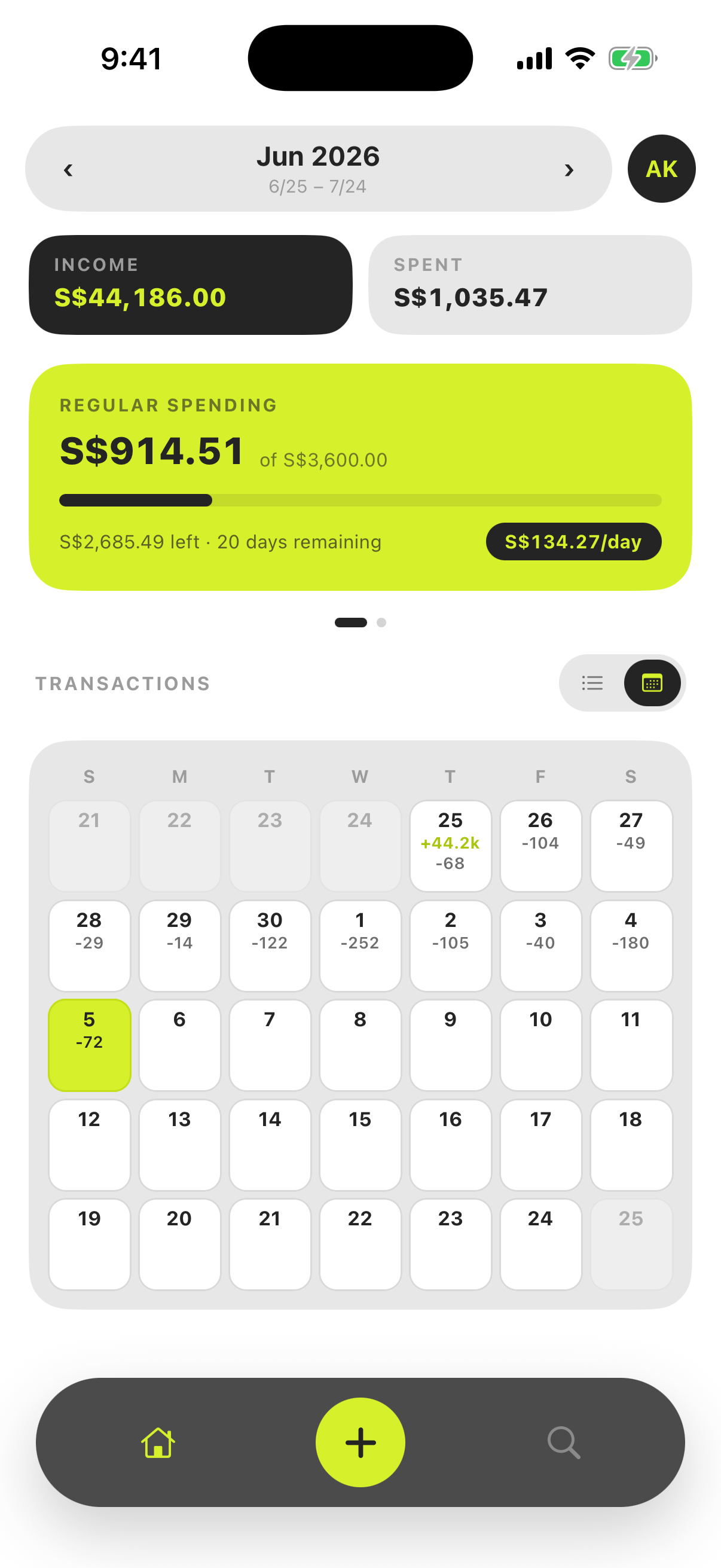
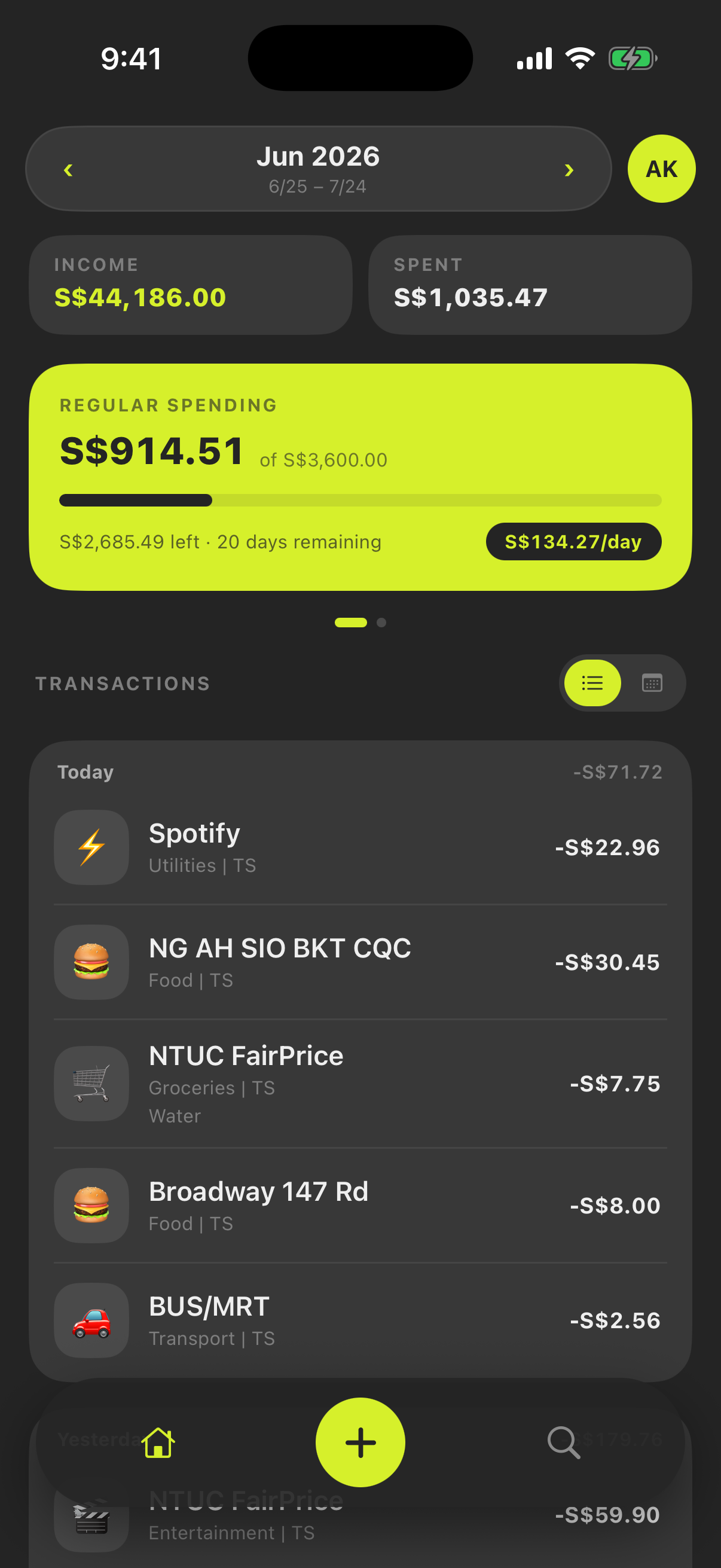
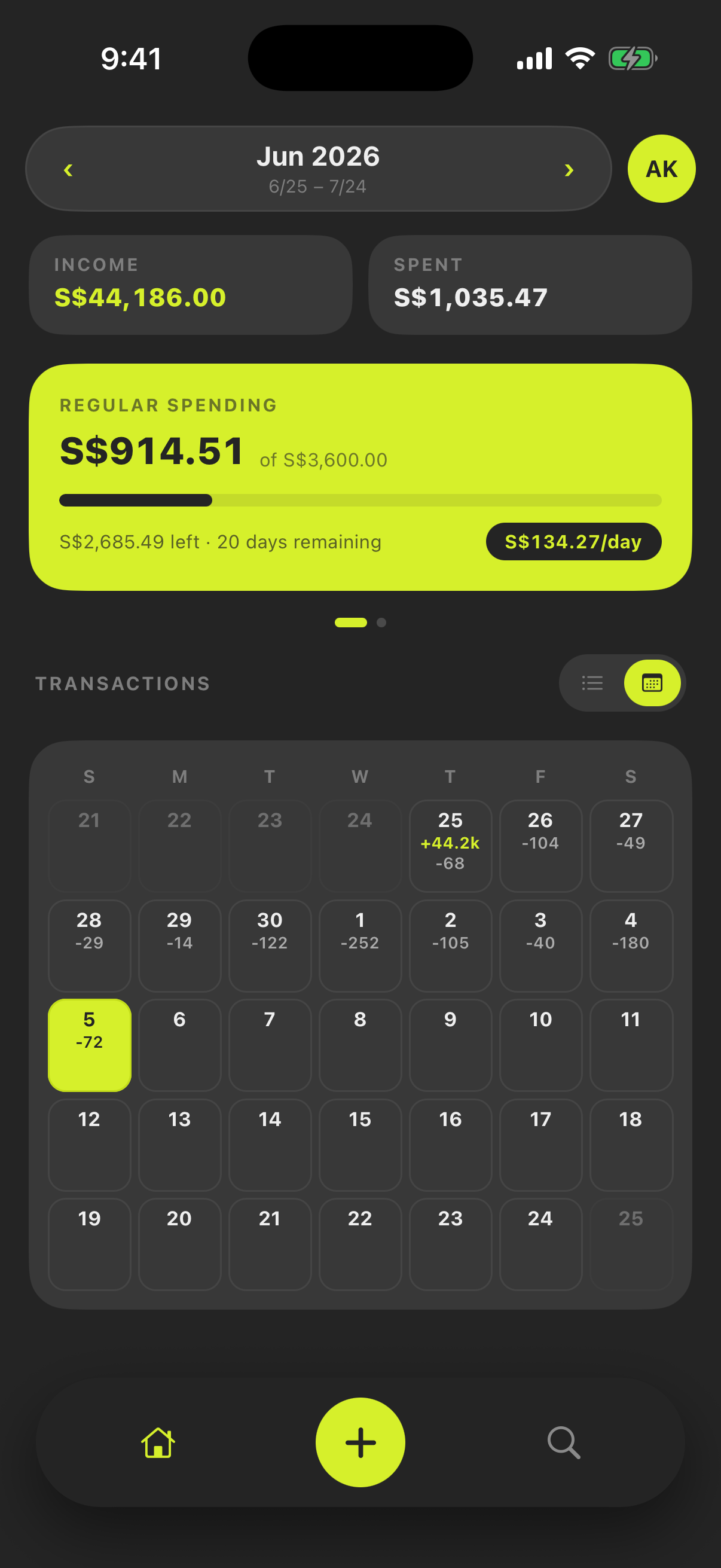
Every control on the dashboard — logging, input options, list vs calendar, and the summary card.
The dashboard at a glance
Period banner — shows the current budget cycle; use the chevrons to step between periods or tap the month to jump straight to one.
Income / Expense summary — live totals for the period. Tap either chip to open the budget view: Income jumps to its income breakdown, Spent to its spending breakdown.
Summary card — your hero card: how much you’ve spent of the regular envelope, the progress bar, days remaining, and the suggested daily spend. Swipe it sideways to flip between the Regular and Recurring envelopes; tap it to open the full budget view.
Needs Review — transactions that failed to be parsed are flagged for review. Tap it to assign a category and move it into the ledger.
Transaction ledger — all transactions for the period, toggled at the top between List (grouped by day, newest first — best for reviewing and editing) and Calendar (a month grid with daily totals — best for spotting patterns, tap a day to see its transactions). Tap a row to edit, swipe left to delete.
+ button — opens the add-transaction sheet.
Logging manually
Tap + and fill in the fields. Here’s what each input means:
Input
What it does
Expense / Income / Transfer
The transaction type. Expenses count against your budget; income adds to your totals; transfers move money between your own accounts and are excluded from both — so shuffling savings around never skews your numbers.
Amount
What was spent or received.
Merchant
Who you paid (or who paid you).
Category
Where it counts — picked from your own category list via the bottom-sheet grid.
Recurring toggle
Marks a fixed bill. It counts against your recurring envelope instead of everyday spending, keeping your regular numbers honest.
Card / Cash
Payment method, for your own tracking.
Tags
Freeform #tags for cross-category tracking — see Tips & tricks.
Note & Date
Optional context, and when it happened.
Editing and deleting
Edit — tap any transaction in the ledger, change what you need, tap Update Transaction.
Delete — swipe left on a row and confirm. This can’t be undone, which is exactly why there’s a confirmation.